global movement
The rapid expansion of transatlantic shipping routes in the late nineteenth century made mass migration to the United States possible on an unprecedented scale, carrying millions of people from Europe, Asia and beyond to American shores in search of land, work and a better life.
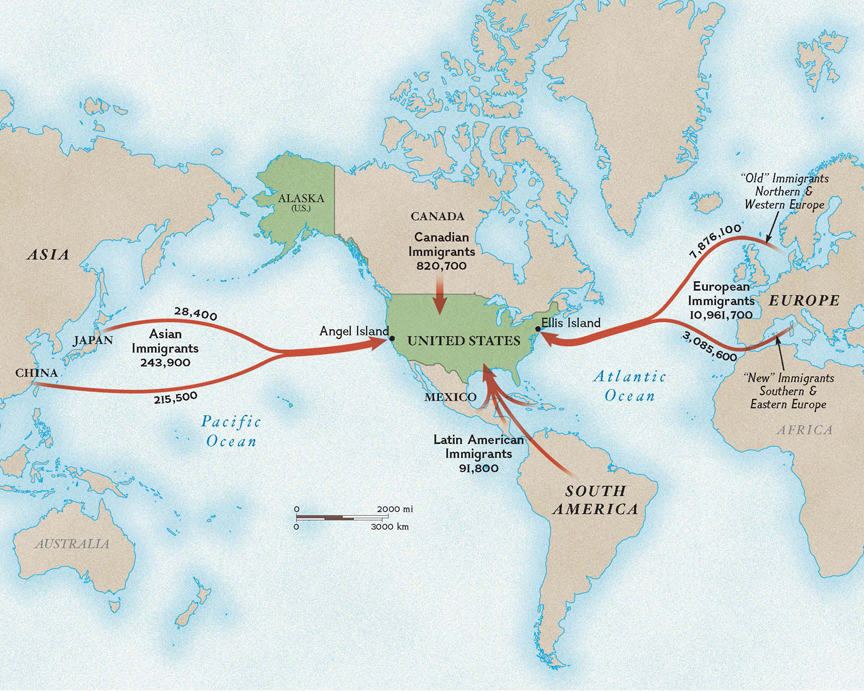
This map highlights the long sea journeys migrants took across the Atlantic and Pacific Oceans. It shows routes from Ireland, Germany, and China, demonstrating the difficult distances many travelled in search of better opportunities in America.
One of the most dangerous journeys to the United States during the 1800s was the Atlantic crossing made by Irish migrants escaping the Great Famine. Many travelled on overcrowded “coffin ships” which were poorly built and lacked basic sanitation. Passengers spent weeks below deck in cramped, dark conditions with little ventilation, limited food, and dirty drinking water. Diseases spread rapidly throughout the ships, especially typhus and cholera, while storms and rough seas made the journey even more difficult. For many migrants, the voyage was exhausting and traumatic, and thousands died before reaching North America.
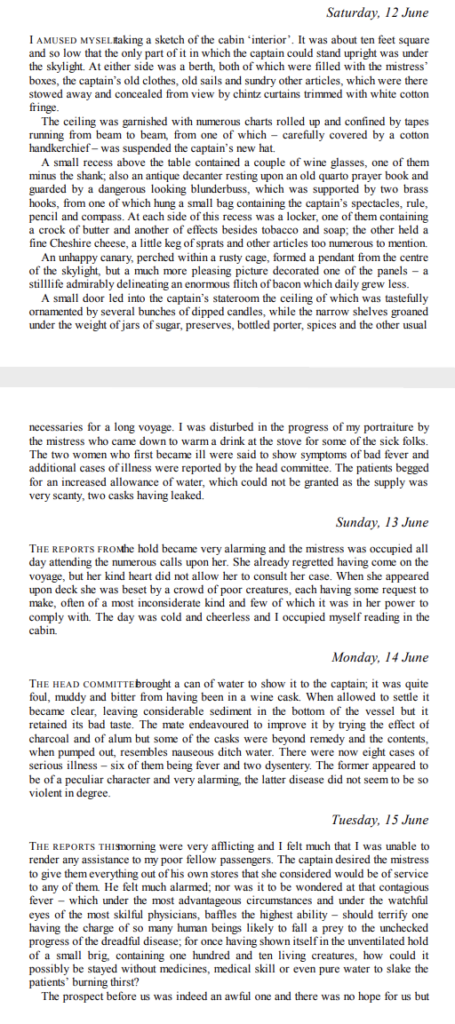
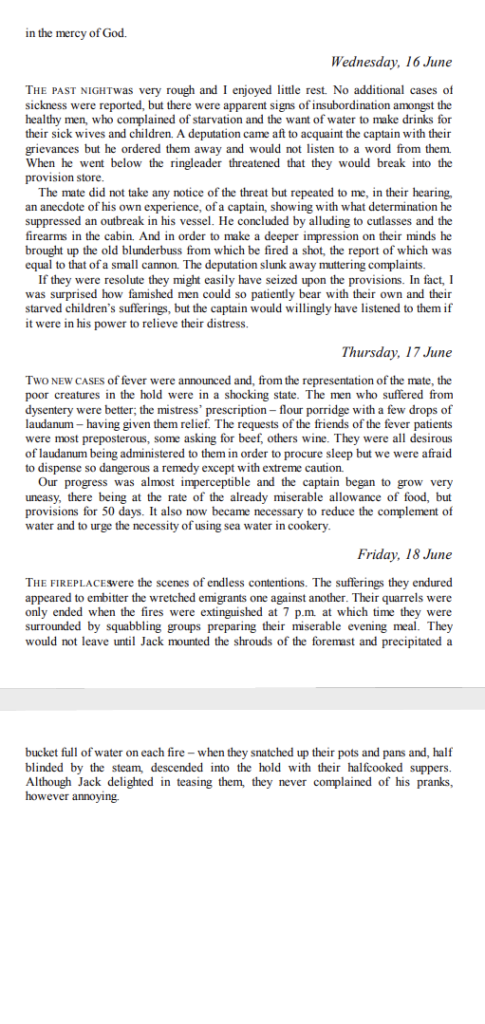
Robert Whyte’s diary (right) shows just how difficult the journey across the Atlantic was for Irish migrants during the Great Famine.
Writing about his voyage in 1847, he described overcrowded and unhealthy conditions on board, where illness spread quickly among passengers. Whyte wrote that “the poor creatures in the hold were in a shocking state,” as many suffered from fever and dysentery during the crossing. Clean water was limited, and he recalled hearing desperate cries of “‘Water, for God’s sake, some water’” from sick passengers below deck. Storms and rough seas made the voyage even harder, while deaths became increasingly common as the ship continued towards North America. His diary offers personal insight into the fear, discomfort, and suffering many Irish emigrants experienced as they tried to escape famine and poverty.
The journey across the Pacific from China was also long and dangerous. Migrants often spent several weeks at sea in crowded conditions with few comforts and limited medical care. Strong storms and rough waters in the Pacific could damage ships and delay arrivals, while poor hygiene and a lack of nutrition increase the risk of illness on board. By the time many Chinese migrants arrived in America, they had already endured a physically demanding and uncertain journey across the ocean.