case study: northern Europeans
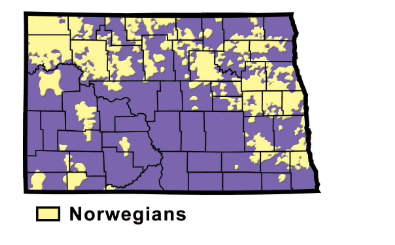
From the mid-late 19th century, drawn by the offers of cheap or free land to farming settlers, large numbers of Scandinavian migrants, mainly Norwegians and Swedes, moved to the American West, specifically the Great Plains.
Whilst they helped transform these areas into an agricultural economy, there were many problems that arose for these families.
The Great plains were barren and unsuitable for farming and were therefore vastly different environmentally to what the Scandinavians were used to due to the little rainfall and extreme temperatures. This caused the region to be described as the ‘Great American Desert’, thus leading to failures amongst settlers in their traditional agricultural methods. Many poorer families were forced to resort to a diet of mostly maize which lead to maluntrition.

The isolation of the settler experience can be seen through the Thomas and Erenstene Olinger Homestead which shows the environmental conditions faced by settlers. Many of these Scandinavian settlers abandoned their farmland and often migrated back to their homeland. This group’s lack of success highlights the reality of westward expansion as it was not simply a story of opportunity and success but one of environmental and economic struggle. Even these white European immigrants who were racially accepted by American society faced harsh realities against the idealised expectations.
The immigration of the Scandinavian farmers ultimately participated in the process of indigenous dispossession as their arrival pushed Native Americans away from their lands. Their presence displaced the environmental practices of indigenous peoples and further altered local ecosystems which Richard White describes as an “ecological invasion”.
