displacement of indigenous peoples
The start of the nineteenth century was a period of great change for Native Americans. Missionaries entered their villages with the aim of turning Native Americans into ‘civilised’ Christians. This alongside resentment toward westward expansion fostered the creation of an anti-American political and religious movement on the eve of the War of 1812. Massive resistance against American expansion quickly followed.
However, tribes divided internally and fought against each other, with some being in favour of assimilation and others being entirely against it. Instead of banding together and fighting the common enemy of the US and westward expansion, Native communities saw great amounts of factionalism, with groups splitting their loyalties and siding either with the US or the British.
Tens of thousands of Native Americans from the Great Lakes to the Gulf of Mexico were forcibly moved west of the Mississippi River, resulting in thousands of deaths and immeasurable amounts of generational trauma. The Trail of Tears is presented as one of the clearest examples of the suffering caused by these policies, with thousands dying from disease, hunger, and exhaustion from the forced movement west.
The Indian Removal Act of 1830 acted as a major impetus for the forcible displacement of Native peoples, mainly impacting Southeastern tribes such as the Cherokee, Creek, Choctaw, Chickasaw, and Seminole nations. The passage of the Indian Removal Act also influenced Native displacement in the Great Lakes region, with the Black Hawk War of 1832 accelerating pressures on Native lands that had sparked after the War of 1812.
The War of 1812 was a conflict between the US and Great Britain that spanned three years from 1812 to 1815, with the British supporting Native American resistance, which was a key driving force of the war. The war proved devastating for Native American alliances, breaking organised resistance in the Great Lakes regions and the South.
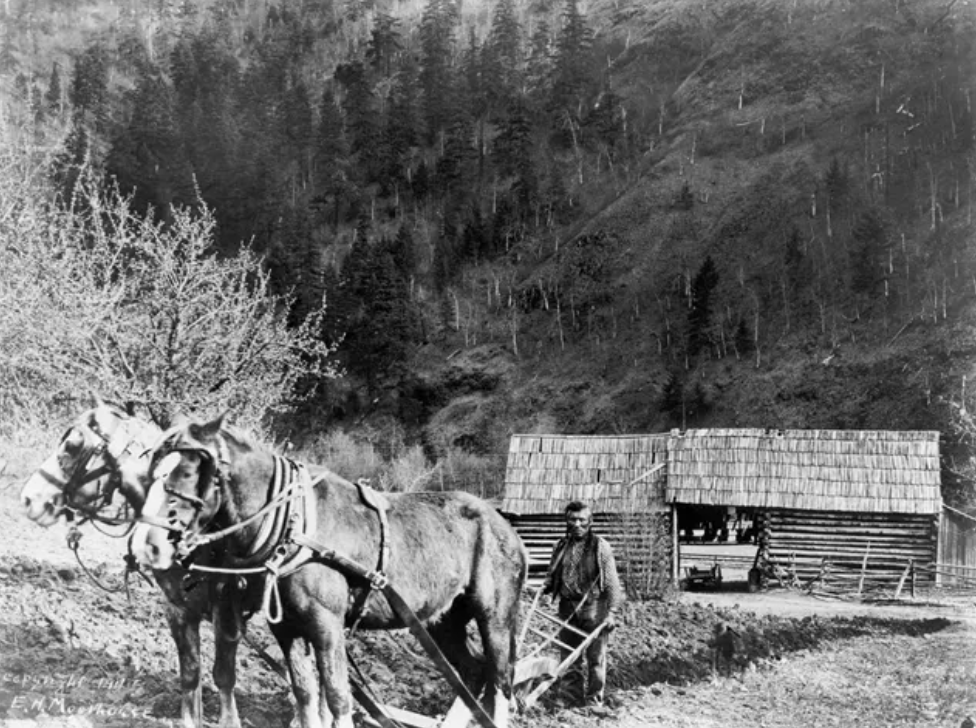

The Native communities were not simply passive victims. They attempted to resist displacement through legal challenges, diplomacy, military conflict, and adaptation strategies.
Examples include Cherokee appeals to the US legal system and Seminole resistance attempts in Florida, demonstrating how Native nations actively fought to defend their sovereignty and territory.
However, the increased spread of settlement across the US and particularly the west led to an increase in violence between Native tribes and the United States, with the US often using military campaigns, massacres, treaty violations and reservation policies as central tools for enforcing American expansion and minimising Native presence.
The reservation system was extremely harmful to the Native peoples’ way of life, disrupting their traditional practices that were often tied to their native territories. Moreover, buffalo acted as a key element to all aspects of Native American life, and life on these reservations meant they could not follow their patterns and hunt them. Reservations therefore functioned not only as a means of geographic displacement and confinement, but also as instruments for reshaping Native societies.
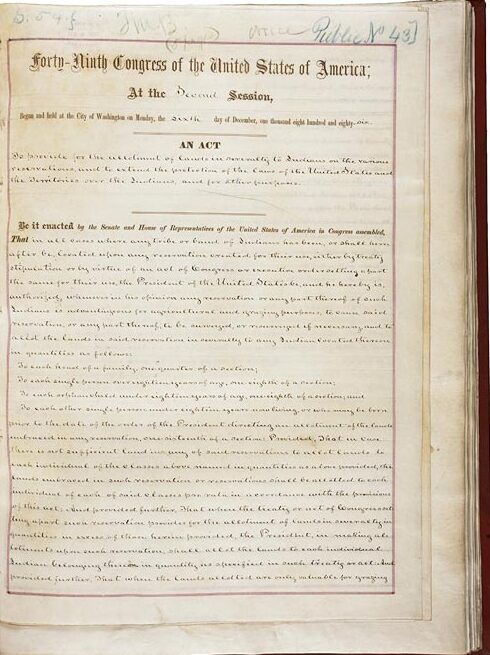
the Dawes Act
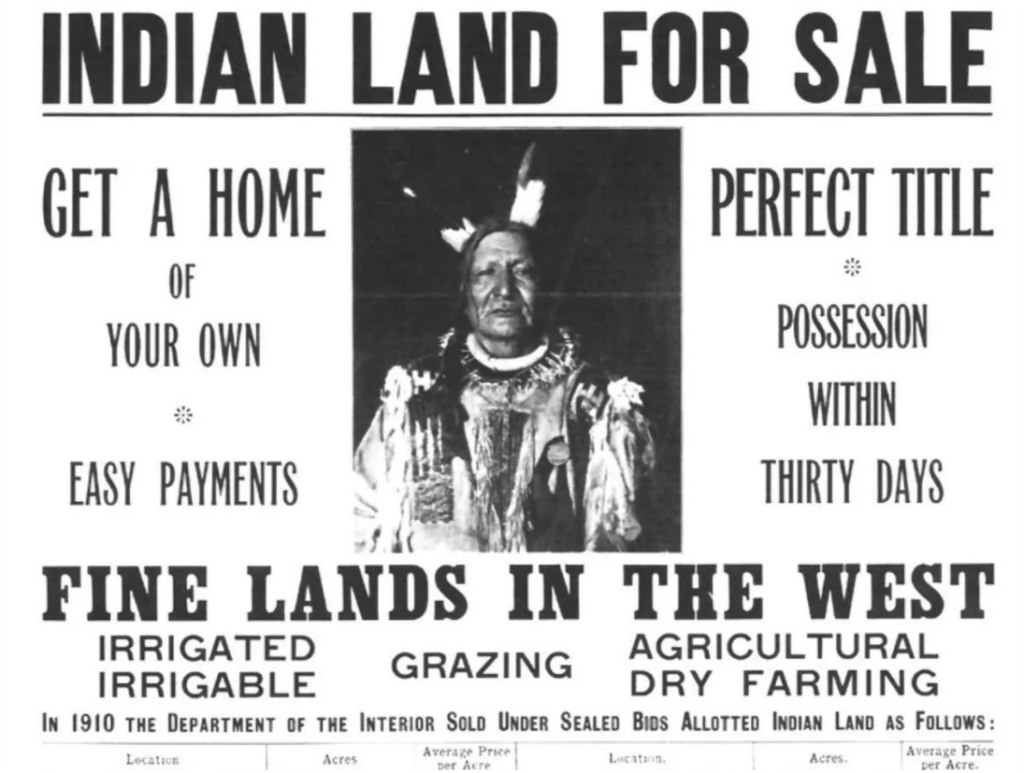
By the late nineteenth century US policy began to shift from removal to assimilation, with the Dawes Act being a key example of an effort to dismantle tribal structures by dividing individual reservations into allotments, turning Native peoples into individual land owners.
This period also saw the rise of assimilation schools that sought to erase Indigenous languages, cultures and identities, making displacement both territorial and cultural. Overall, Native displacement was a systematic consequence of westward expansion, driven by coercion and violence with long-term consequences on Native communities and culture. Although the effects were detrimental to the livelihood and culture of Native peoples, this displacement was of crucial importance to enabling US expansion across the west, demonstrating that westward expansion was neither inevitable nor benign, and was certainly not a peaceful endeavour.
“An Act to provide for the allotment of lands in severalty to Indians on the various reservations, and to extend the protection of the laws of the United States and the Territories over the Indians, and for other purposes”
The Dawes Act 1887