women
Making up a quarter of the population in New York and Boston, the Irish, much like today’s population of Mexican immigrants, took jobs that Native-born workers did not want. Despite the mass emigration of Irish men as well as women due to the Great Hunger of 1845 to 1851, Irish women found employment more readily than the men.
Young single Irish immigrant women dominated the domestic service sector in many American cities and were the main sources of letters home, often filled with money to send back to those left behind in Ireland. In San Francisco, domestics received wages proportionate to the prices paid for everything else in smaller towns; however, wages were poor, usually less than four dollars a week, but they were provided with food, lodging and a uniform, so they had very few expenses.

“Women and wagons were not only suggestive of our nation’s development, but were a permanent factor in the earliest development of the civilization of the nation”
Grace Raymond Hebard and the West as Woman’s Place
Women experienced a shift from traditional gender roles to a life that was full of physical labour and political freedom. This period saw women being held at a high value due to the high demand for labour. They were now responsible for maintaining the household in primitive condition, as well as operating hotels, laundries and restaurants to make a living. Western states were seen as being more progressive and was the birthplace of American women’s suffrage.
The Westward Expansion affected many different groups of women. Mexican American women lost their land titles and legal rights despite treaty protections and were instead reduced to nothing more than a “colonised” status, exposing them to violence, vigilante justice and social segregation.
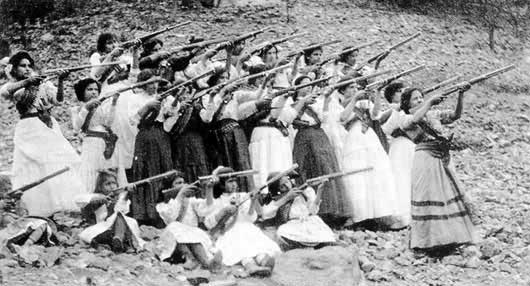
As well as this, African American women moving to the West faced severe discrimination, and housing segregation was a big contributing factor. Another group of women that were affected were the Native American Women; the Westward Expansion directly dismantled their traditional cultures, roles, and ways of life. Native American Women were forced onto reservations as the US Government seized lands, leading to these women losing access to traditional resources and experiencing high rates of poverty. Women, particularly immigrant women from Germany and Italy faced economic injustice, playing a vital part in the development of the rural and urban economy whilst being paid significantly less than the men that were completing corresponding tasks.