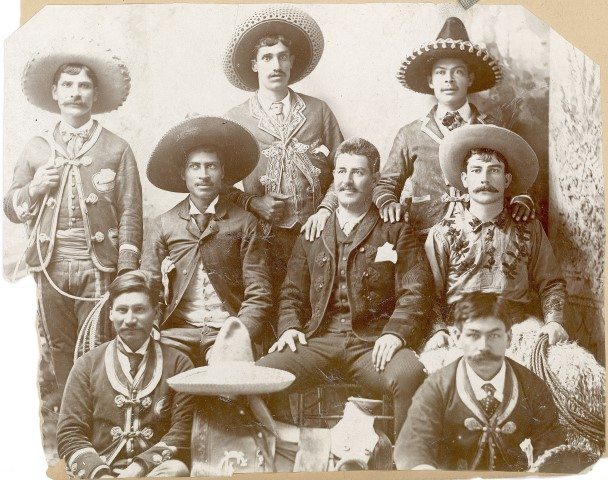
case study: Mexican vaqueros
The vaquero emerged in colonial Mexico in the mid-1500s from the collision of Spanish herding traditions and Indigenous labour. Drawn from mestizo, Indigenous, and African-descended communities, they were working-class men bound to vast hacienda ranches yet celebrated within their own culture for extraordinary skill.
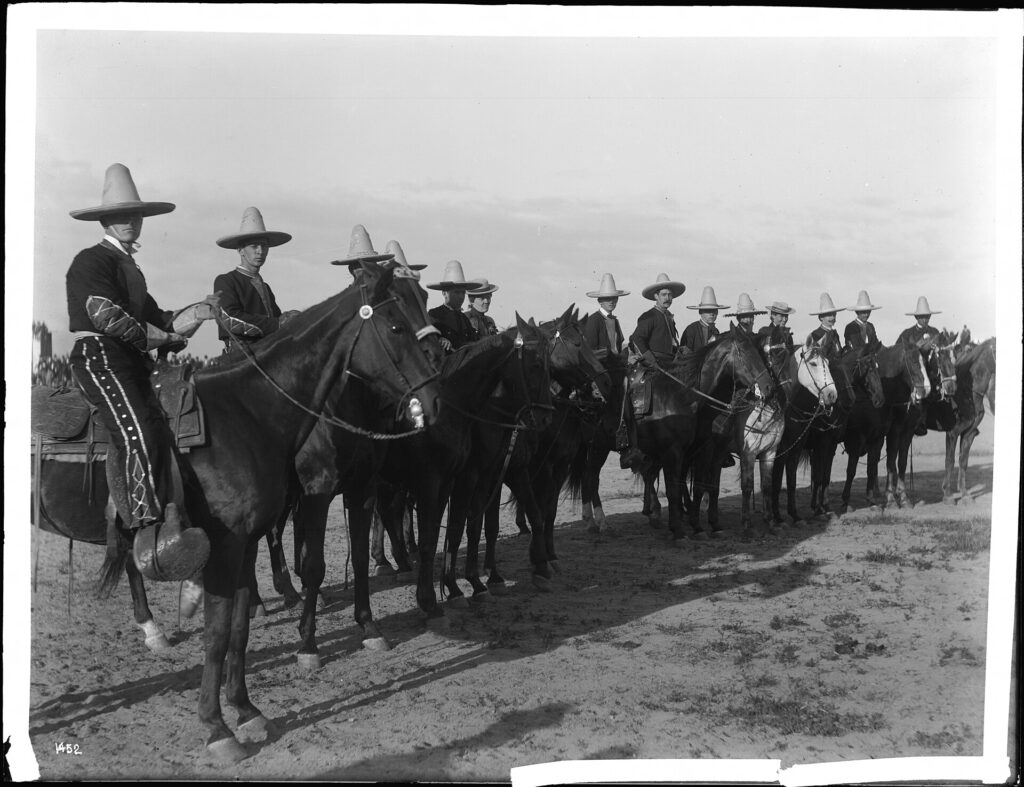
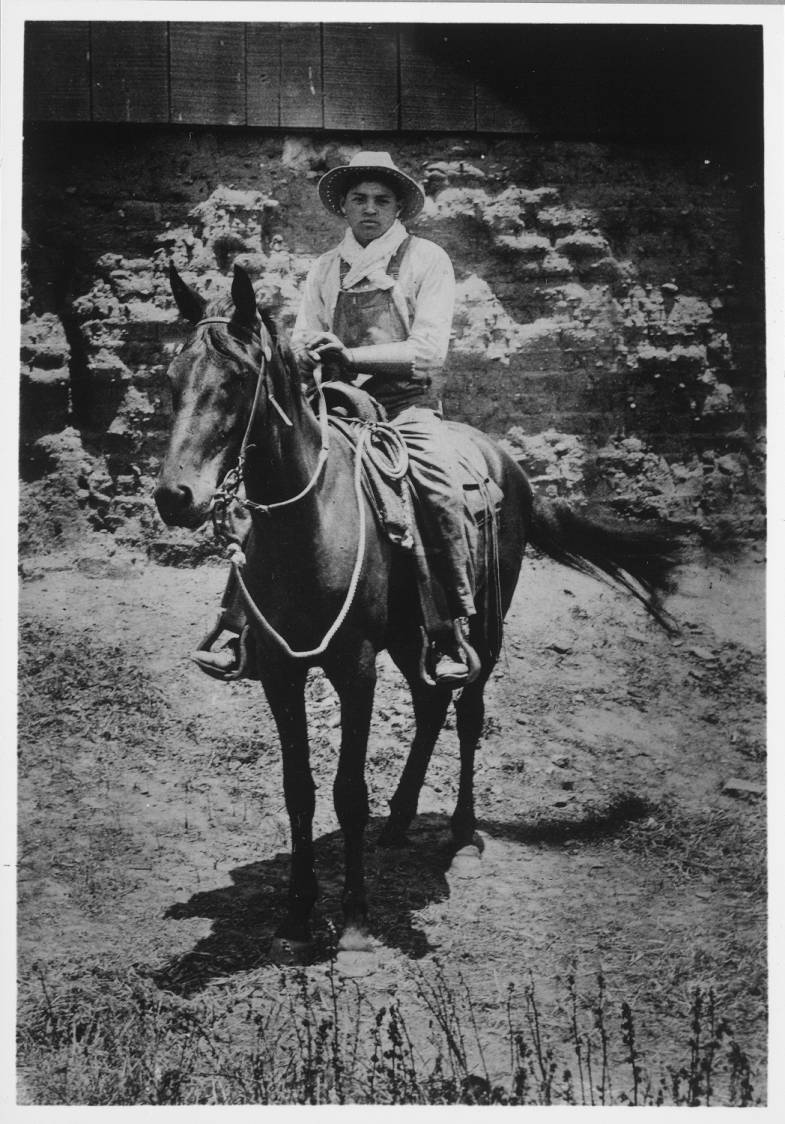
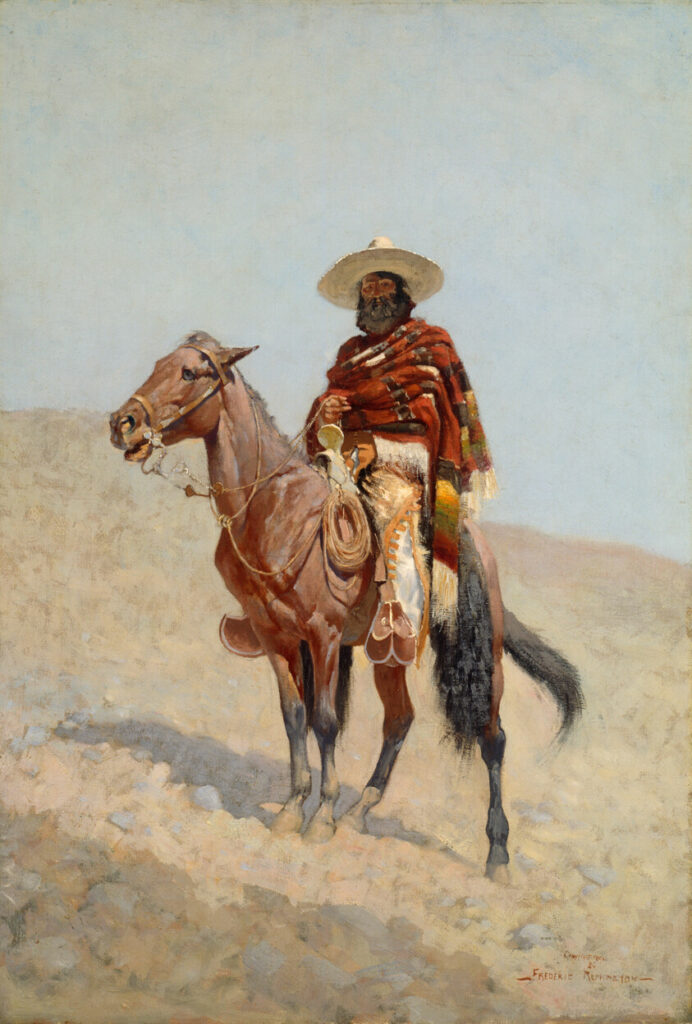
Vaqueros were, without question, the original cowboys, a fact that American popular culture has largely obscured. When Anglo-Americans flooded into vaquero territory after the Mexican-American War of 1848, they found an entire working culture already in place and adopted it wholesale, learning the trade directly from vaquero teachers. The equipment, the techniques, and even the language passed directly into American hands: lasso, lariat, rodeo, ranch, corral, stampede, bronco, mustang, chaps, and buckaroo are all corruptions of Spanish words. The romanticised Anglo cowboy of dime novels and Hollywood Westerns was built almost entirely on a vaquero foundation, yet the vaquero himself was undeniably written out of the story.
Expert horsemen and ropers, they trained horses with remarkable subtlety, braided their own rawhide lassos by hand, and spent weeks or months at a time managing enormous herds across brutal terrain.
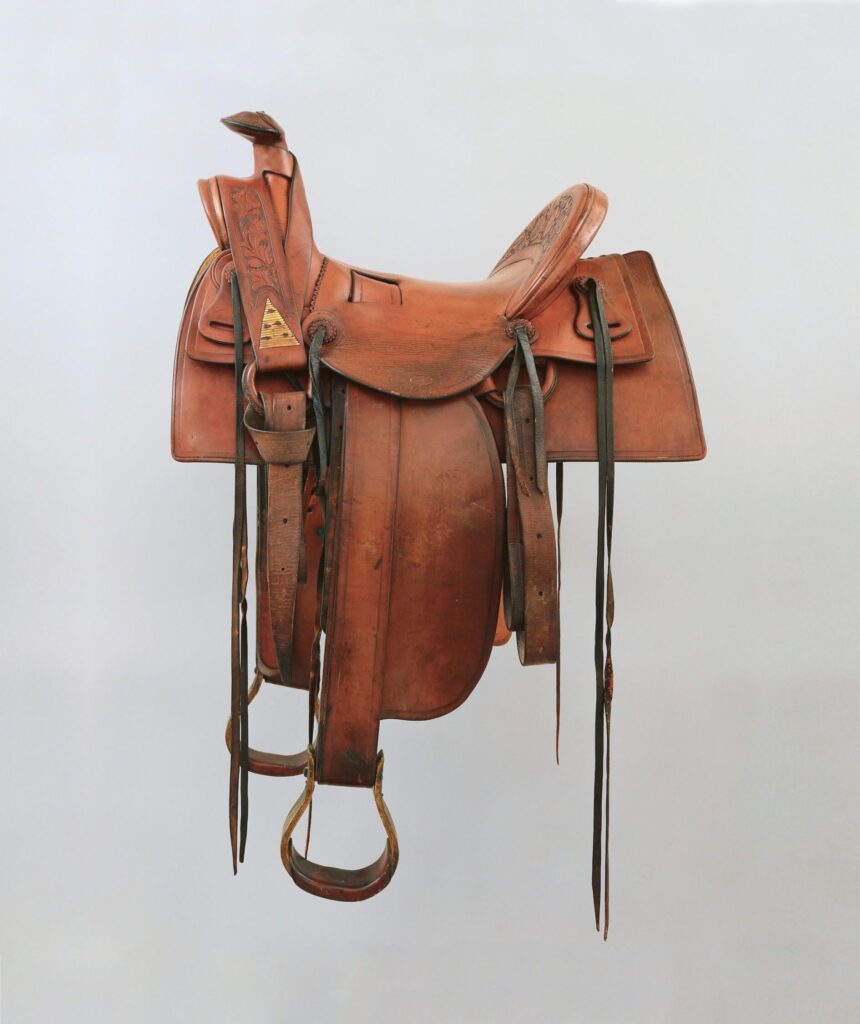
Their gear, including wide-brimmed sombreros for shade, Chaparreras to protect their legs from thorny bushes, and ornate spurs to communicate with their horses while herding, was designed for function but evolved into a distinctive cultural identity. Their saddles were built for long days of hard work, designed to withstand the demands of cattle herding across vast and unforgiving terrain, but were also notable for the intricate craftsmanship and detailed decorative leatherwork that reflected the pride and identity of its rider.
Despite their indispensable role, they were poorly paid and often held in debt bondage to landowners, occupying a paradox of low social status and deep communal respect.
The vaquero’s impact on the American wilderness was transformative and lasting. The migration of their cattle herds northward from New Spain into Texas, California, and the Southwest fundamentally altered grassland ecosystems through overgrazing, soil compaction, and the destruction of riparian habitats. Native perennial grasses gave way to invasive Old-World species carried along livestock trails; the suppression of fire-carrying grasses allowed mesquite and shrubland to encroach across millions of acres.
Their cattle also competed directly with native bison for grass and water, accelerating the collapse of herds that had once numbered in the tens of millions. The water diversion, stock pond construction, and open-range patterns they established shaped land use across the American West for centuries, and the vast ecological degradation they initiated eventually prompted federal intervention in the form of the Taylor Grazing Act of 1934.