environmental impact
It had become commonly known by 1990 that newly-introduced diseases from Europe and Africa shaped relations between Natives and newcomers, and that livestock and other invasive species left its mark on American environments and challenged Native peoples’ well-established ways of living with nature.
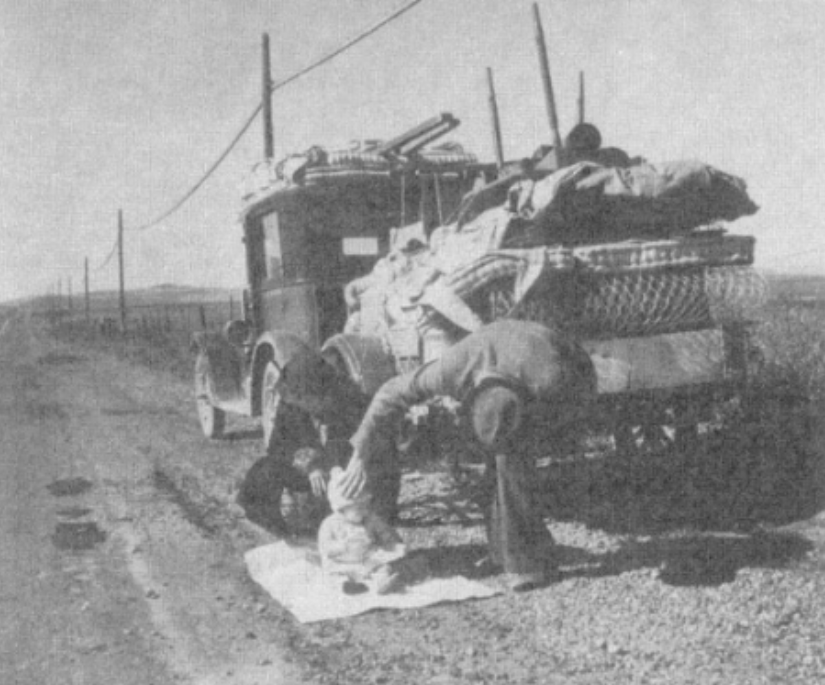
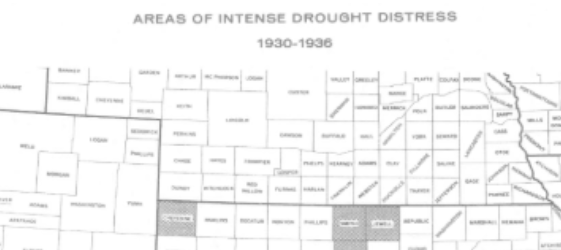
Richard Hornbeck explains that the ‘1930s American Dust Bowl created archetypal “Dust Bowl migrants” refugees from environmental collapse”. He notes that ‘Plains counties experieneced substansial erosion that reduced agricultural land values in more-eroded counties, relative to less-eroded counties, and led to relative declines in population through the 1950s’.
Long distance migrants, or ‘tin-can tourists’ went farther West and the Pacific Northwest gained 460,000 migrants during the thirties. The conditions of these farming lands were very poor and almost all labourers were forced to settle on abandoned property or seek relief in the city. New irrigation possibilities were opened up for a small number of plainsmen only due to the building of Bonneville Dam on the Columbia River, and others went farther north to the Matanuska colony organised in Alaska by the federal government, yet the majority did not have these opportunities.
Driven by idealogies such as Manifest Desitny, a destruction of Native managed landscpaes where Native Americans nurtered edibles and medicinal flora was seen when these practices were stopped due to the removal of Indigenous people. As well as this, the expansion of the railroads, mining and logging industries directly vaused widespread clearing and desturction of native habitats.
These rapid and often unsustainable agricultural practices also accelerated the expansion of deserts, and the Westward expansion operated as a first hand driver of desertification.
The railroads and industrialisation that came from the ideology of Manifest Destiny led to huge deforestation and profoundly affected indigenous groups. Due to the rapid transformation of landscapes by American interests, where trees were replaced with railroads, indigenous people were forced off the land. The action of clearing of the forests for railroads and agriculture meant that Native American ecosystems were destroyed, particularly for those in the Pacific Northwest and the Great Plains.